
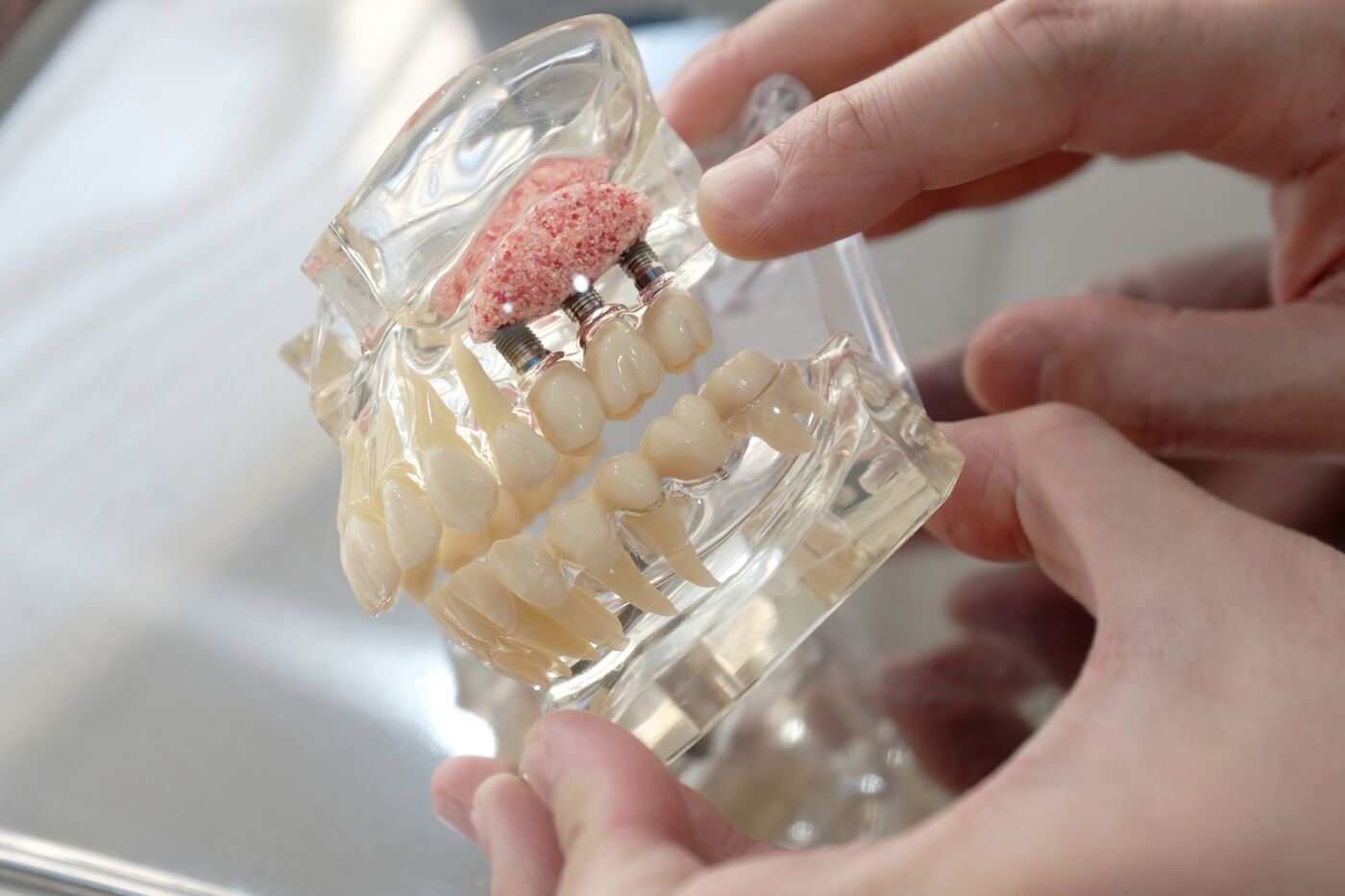
When patients begin exploring dental implants, they are often surprised to learn that the health of the jawbone is just as important as the implant itself. A dental implant works by bonding with the bone, much like a natural tooth root. For that to happen, there needs to be enough healthy bone in the right place to hold the implant securely.
Unfortunately, bone loss is very common after a tooth is lost. It can also happen because of gum disease, infection, injury, or wearing dentures for many years. Many patients who have lived with a missing tooth for some time do not realize how much bone has changed until they have a 3D scan.
If you have been told you need a bone graft, or you are wondering whether you might, this guide explains why grafting is recommended, how it works, and what the healing process looks like. In many cases, bone grafting is what makes a successful implant possible.
Why the Jawbone Shrinks
The bone that surrounds your teeth stays strong because it is stimulated every time you chew. When a tooth is removed, that stimulation stops, and the body gradually begins to reabsorb the bone in that area.
This process starts soon after a tooth is lost and continues over time. The longer a space is left empty, the more bone may be lost. Bone loss can also change the shape of the face and make neighboring teeth less stable.
What a Bone Graft Does
A bone graft adds bone or bone-like material to areas where the jaw has become too thin or too short. The graft acts as a framework that encourages your body to grow new bones.
Over time, your natural bone gradually replaces and blends with the graft material, creating a stronger foundation for a dental implant.
Common Types of Bone Grafts
The type of graft recommended depends on how much bone is needed and where it is located. Common graft materials include:
- Autografts: Bone taken from another area of your own body
- Allografts: Processed human donor bone from a tissue bank
- Xenografts: Processed bone from an animal source, often bovine
- Synthetic grafts: Biocompatible materials designed to support bone growth
All of these materials are carefully prepared and have been used in dentistry for many years. Your surgeon will recommend the option that best fits your needs.
Common Grafting Procedures
A socket preservation graft is placed immediately after a tooth is removed. It helps maintain the bone and makes future implant placement easier.
A ridge augmentation rebuilds the width or height of the jawbone in areas where bone has already been lost.
A sinus lift adds bone to the upper jaw near the back teeth. This area is often thin because the sinus sits just above the roots of the upper molars.
Does Grafting Delay My Implant?
Sometimes it does, and sometimes it does not. In some cases, a small graft can be placed at the same time as the implant. In others, the graft needs several months to heal before the implant can be placed.
The timeline depends on the size of the graft, the location, and how your body heals. Your surgeon will explain the expected schedule before treatment begins.
What Recovery Is Like
Most patients find that recovery from a bone graft is manageable. Mild swelling, tenderness, and minor bruising are common for a few days.
Following post-operative instructions is very important. This may include eating soft foods, avoiding pressure on the area, taking medications as prescribed, and not smoking. Good care helps the graft heal properly and supports long-term implant success.
Find Out If a Bone Graft Is Right for You
The only way to know whether you need a bone graft is through a thorough evaluation. At Desert Maxillofacial Center, we use advanced 3D imaging to measure the bone and plan your treatment with precision.
We serve patients throughout the Coachella Valley, call (760) 837-1515 to schedule a consultation and take the first step toward a healthy, stable smile with dental implants.